
Dropout CEO Sam Reich Discusses the Future of "Rulette" and Game Changer
 Jane McGonigal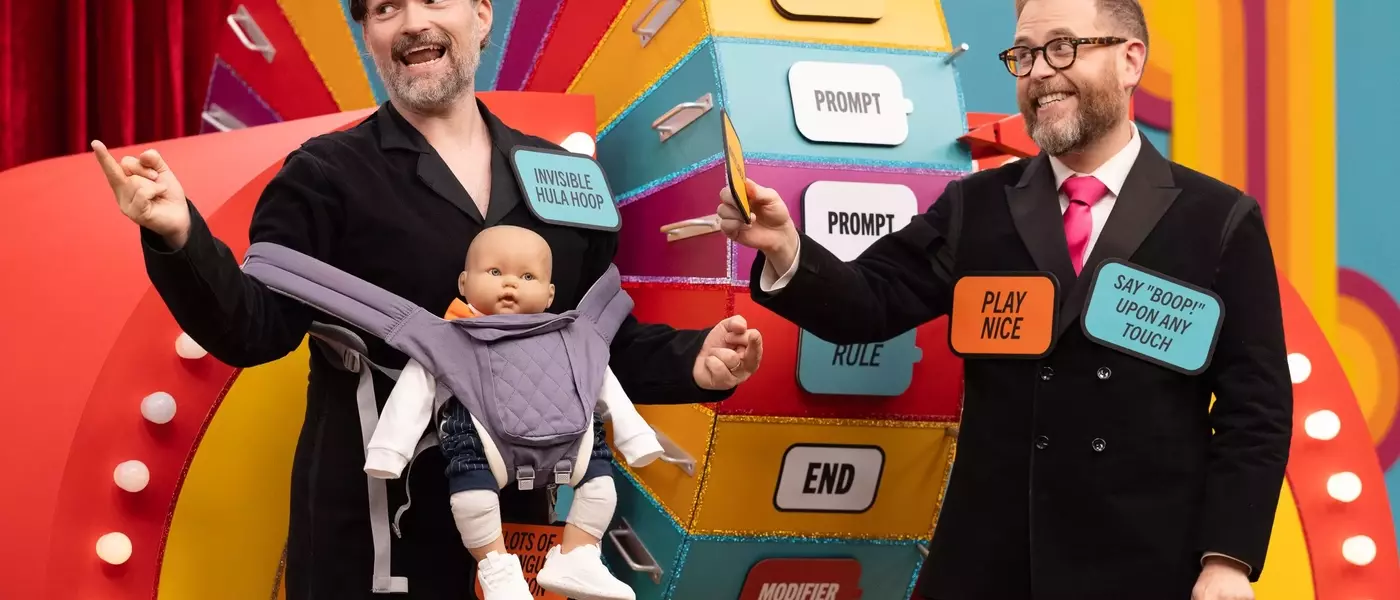
The latest season of Dropout's "Game Changer" has concluded, leaving subscribers eager for more of host Sam Reich's innovative comedic challenges. A fan-favorite segment, "Rulette," has generated significant buzz, with many viewers hoping it will evolve into its own series. However, Reich, the creative force behind Dropout, has voiced reservations about the long-term viability of "Rulette" as a standalone show, citing concerns about its potential for becoming repetitive, despite its undeniable entertainment value.
"Rulette" first captivated audiences in its seventh season, featuring comedians Jeremy Culhane, Anna Garcia, and Oscar Montoya. This unpredictable game involves participants wearing velcro suits adorned with random rules, dictated by a giant spinning wheel, which they must adhere to or face point deductions. These rules can range from extreme politeness to the prohibition of profanity, leading to hilariously chaotic outcomes. The segment's immense popularity led to its return in Season 8 as "Rulette 2," featuring Garcia, Demi Adejuyigbe, and Josh Ruben, further solidifying its status as a fan favorite and sparking widespread demand for a dedicated spin-off.
Despite the overwhelming fan enthusiasm, Reich remains cautious about committing to a "Rulette" spin-off. He acknowledges the demand but questions the segment's capacity to maintain its fresh appeal over numerous episodes. He explained in a recent interview that while it's consistently entertaining to produce, he's "not convinced" it wouldn't eventually become monotonous after repeated viewings. He points to Josh Ruben's memorable "crashout" in "Rulette 2" as a highlight from Season 8, underscoring the segment's current impact.
Dropout has a history of developing popular "Game Changer" segments into full-fledged shows, such as "Make Some Noise" and "Crowd Control." When considering such transitions, Reich and his production team evaluate several key factors. Paramount among these is scalability: will the concept remain engaging after multiple iterations? They analyze how distinct each episode would be and whether repetition would diminish its appeal. The spontaneity and unique comedic chemistry, or "alchemy," of an episode are also crucial considerations. They assess if a particular segment's success was a one-off stroke of luck or a repeatable formula.
For example, "Make Some Noise," with its improvisational nature, is inherently repeatable, with its enduring appeal stemming from the ever-changing combinations of comedians. The final consideration for Reich is whether a potential new show would offer something unique to Dropout's existing content library. He believes that pushing "Rulette" too far might result in it feeling too similar to the intersection of "Game Changer" and "Make Some Noise."
Reich's vision for Dropout emphasizes a diverse and innovative content landscape. While it has been a year since the launch of a new series like "Crowd Control," Reich assures that many fresh ideas and shows are in development. He expresses a desire for Dropout to continually explore unique and even "terrifyingly unique" content. With initiatives like "Make Some Noise," licensed content, and a board game Kickstarter, Reich's objective for the platform is clear: to offer a wide and varied spectrum of engaging entertainment that challenges conventional norms.