
Estonian Folklore Characters Star in Tallinn Black Nights Film Festival's 30th Anniversary Visual Identity
 Stephen King
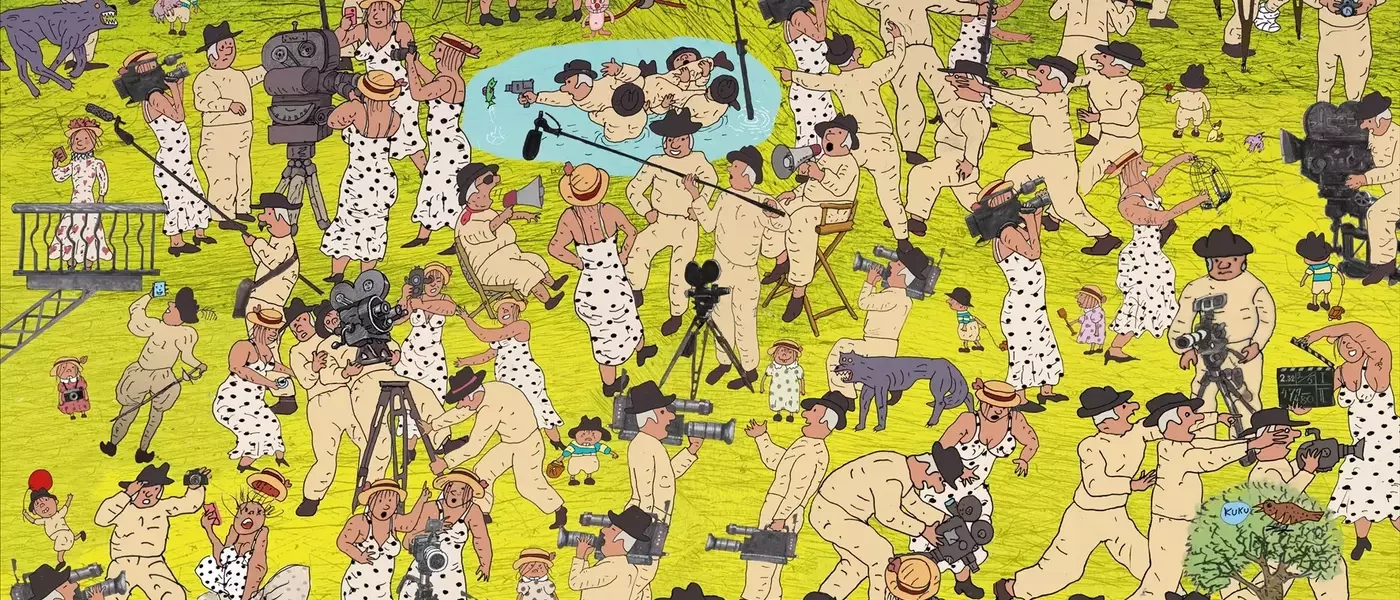
The Tallinn Black Nights Film Festival, widely known as PÖFF, is embarking on a new era as it commemorates its 30th anniversary. To mark this significant milestone, the festival has unveiled its first-ever dedicated visual identity, a creative endeavor spearheaded by the celebrated Estonian cartoonist and animation director, Priit Pärn. This innovative approach integrates the whimsical 'Kilplased' from Estonian folklore into the festival's promotional materials, promising a fresh and distinctive artistic vision. Pärn's design, featuring these traditionally foolish yet ingeniously resourceful characters in the act of filmmaking, aims to inject a unique blend of humor and cultural heritage into the festival's public image. This initiative not only honors Estonia's rich storytelling tradition but also positions PÖFF as a pioneering event committed to exploring new artistic frontiers and collaborating with national talents.
Tallinn Black Nights Film Festival Embraces Folklore for 30th Anniversary Identity
Tallinn, Estonia – In a groundbreaking move for its 30th annual celebration, the Tallinn Black Nights Film Festival (PÖFF) has introduced its inaugural visual identity, a vibrant and imaginative concept developed by the esteemed Estonian animator Priit Pärn. This fresh artistic direction, unveiled on October 28, 2026, aims to infuse the festival with a distinctive cultural flavor, moving away from conventional film festival aesthetics. Maria Plees, PÖFF's head of marketing, emphasized the festival's desire to forge new traditions as it steps into its next decade.
Priit Pärn, a luminary in Estonian animation, was commissioned for this unique project. On his 80th birthday, Pärn revealed his design, which prominently features the 'Kilplased' – a group of foolish yet resourceful characters deeply rooted in Estonian folklore. Pärn explained his choice, stating that the Kilplased had never before been depicted promoting a film festival or engaging in filmmaking, making their inclusion unprecedented and guaranteeing a successful, original outcome due to their collective endeavors.
The creative agency AD Angels collaborated with PÖFF to develop this inaugural visual identity. The festival's objective is to annually present audiences with a visually unique and artistically ambitious concept, simultaneously showcasing Estonian artists and their work to both local and international audiences. This initiative fosters a dialogue between cinema and other art forms, enriching the cultural landscape.
Pärn's extensive history with the Kilplased dates back to 1974, including his work on the animated film 'The Kilplased,' as well as authoring comic books and illustrating books featuring these characters. In an exclusive exchange, Pärn shared insights into his creative process. He described his initial pride in being selected as the first filmmaker to design PÖFF's visual identity, acknowledging his diverse background as a caricaturist, graphic artist, and illustrator. He received minimal specific guidance, primarily the need for originality and specific proportions. The concept of using the Kilplased emerged quickly, taking only about five minutes, inspired by the idea of creating something opposite to a typical, striking poster – akin to 'wallpaper' in its intricate detail.
For international audiences unfamiliar with them, Pärn noted that similar 'foolish folk' characters exist across various European cultures, such as England's 'Gothamists.' He traced the Estonian Kilplased's origins to German tales, adapted by Estonian authors, humorously suggesting that these adaptors might have been cleverer than the Kilplased themselves. Pärn expressed his hope that the poster, with its vibrant yellow and harmonious textiles interspersed with black cinematic tools, evokes cheerfulness and a sense of dynamic filmmaking activity. He envisions viewers imagining the Kilplased screening films for each other, creating a truly immersive cinematic world. Despite their collective nature, Pärn hinted at a hidden 'star' for viewers to discover within the bustling scene, adding an interactive element to the artwork.
Regarding future Kilplased cinematic projects, Pärn expressed skepticism, citing funding challenges for his uniquely original idea of a thriller featuring hundreds of identical Kilplased, engaged in unclear activities. Thus, while the Kilplased grace the festival's 30th anniversary, their return to screen may remain an imaginative concept.
The integration of the 'Kilplased' into the Tallinn Black Nights Film Festival's visual identity serves as a powerful reminder of how cultural heritage can enrich contemporary artistic expressions. As a journalist, I find this initiative particularly inspiring because it demonstrates a fearless commitment to originality and local storytelling. In an increasingly globalized world, festivals often strive for a universal appeal, sometimes at the expense of their unique regional characteristics. PÖFF, however, has embraced its roots, offering a whimsical yet profound nod to Estonian folklore. This not only sets it apart but also invites a deeper engagement from both local and international audiences, prompting them to explore the rich tapestry of Estonian culture. It's a testament to the idea that true innovation often lies in looking inward and celebrating what makes a culture distinctively its own.