
The Fading Footprints: Exploring the Forgotten Figures of Peanuts
 Reiner Knizia
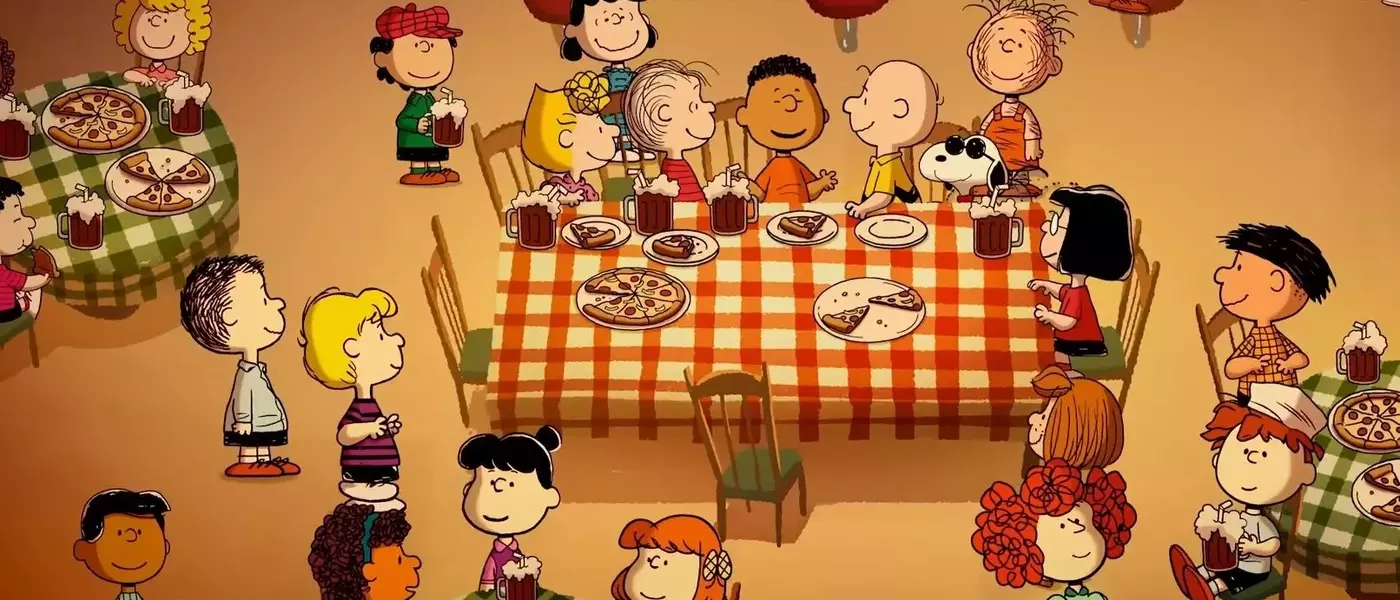
Every long-standing comic strip invariably features individuals who, despite initial prominence, gradually recede into the background. This phenomenon is a natural part of a series' evolution, where creators refine their narratives and character dynamics. The beloved 'Peanuts' comic strip by Charles M. Schulz is a prime example, showcasing a fascinating roster of early characters who eventually gave way to more iconic figures. This analysis explores these less-remembered personalities, shedding light on their original roles and the reasons for their eventual, subtle departures from the spotlight.
Delving into the Diminished: The Early Peanuts Cast
In the expansive universe of Charles M. Schulz's 'Peanuts,' certain characters, though pivotal in the strip's nascent years, eventually found their roles diminishing as new personalities emerged and the narrative matured. This detailed exploration uncovers the journeys of these foundational figures, from their initial introductions to their gradual transitions into the background.
Shermy, the Early Confidant: Among the first characters to grace the 'Peanuts' panels, Shermy was envisioned as a close companion to Charlie Brown. Introduced in the strip's debut on October 2, 1950, he even held the distinction of being the first character to speak. Inspired by Schulz's childhood friend, Sherman Plepler, Shermy's initial role was often that of a 'straight man,' lacking the distinct eccentricities that would later define the strip's more enduring figures. As Schulz's creative vision developed and characters like Lucy and Linus brought more unique dynamics, Shermy's appearances became increasingly sporadic, with his final speaking role occurring in June 1969.
Patty Swanson, the Original Socialite: Not to be confused with Peppermint Patty, the original Patty, named after Schulz's cousin Patricia Swanson, debuted alongside Shermy in 1950. Initially, her character, much like Shermy's, lacked a defining trait, leading to a similar fading of her role. However, Schulz later carved out a niche for her as one of the neighborhood's more snobbish figures, often seen collaborating with Violet in their playful, sometimes teasing, interactions with other children. This distinct characteristic allowed her to maintain a presence longer than Shermy, appearing in many classic animated specials and making occasional cameos in the strip until November 1997, despite her speaking roles becoming rare after the mid-1960s, particularly following the introduction of Peppermint Patty in 1966.
Violet Gray, the Precursor to Sarcasm: Violet Gray marked Schulz's first entirely new character creation for 'Peanuts,' arriving in 1951. She holds several 'firsts,' including being associated with the earliest versions of the iconic 'football gag' and being the first to label Charlie Brown a 'blockhead.' In many ways, Violet served as a foundational character for the more pronounced personality of Lucy Van Pelt, later establishing herself as one of the neighborhood's more affluent children, frequently referencing her well-to-do father. Her complex, often ambivalent, relationship with Charlie Brown endured for decades. Her consistent appearances started to decline in the mid-1980s, eventually leading to her sharing her final comic strip appearance with Patty in a Thanksgiving-themed installment in November 1997.
Frieda, the Proud Owner of Curly Hair: Frieda, who made her debut in 1961, was most notably characterized by her immense pride in her 'naturally curly hair.' Named after Schulz's friend Frieda Rich, she was portrayed as a somewhat vain and talkative girl, often befriending Linus. Schulz reportedly found it challenging to develop her beyond her signature hair, leading to a relatively shorter run as a prominent character. Her memorable moments include flirting with Schroeder despite Lucy's presence, introducing her cat Faron to Snoopy, and exhibiting a higher tolerance for Linus' unique habits compared to other characters. Although she appeared in several animated specials, including 'A Charlie Brown Christmas,' her role was reduced to cameos by 1970 and she ceased appearing entirely after 1985.
Five, the Numerical Enigma: Perhaps one of the more unusual and obscure characters, Five was introduced in 1963 as a humorous commentary on the then-new ZIP postal codes, a concept Schulz found rather unappealing. His full name, including his surname 95472 (the ZIP code for Sebastopol, California, where Schulz resided), and his twin sisters 3 and 4, underscored this quirky premise. Despite being largely a one-joke character, Five became a remarkably consistent background presence for two decades, often mistaken for a surprisingly clean Pig-Pen. He featured prominently in the dance scene of 'A Charlie Brown Christmas' and made silent appearances in numerous animated specials. His speaking role in the 2022 special 'It's the Small Things, Charlie Brown' was his first in almost 40 years. In the comic strip, after a few post-debut appearances, Five's presence concluded in May 1983 after being hit by a baseball, an event hopefully unrelated to his disappearance.
The evolution of 'Peanuts' characters reflects the dynamic nature of creative storytelling. These early figures, though eventually superseded by others, played crucial roles in shaping the comic strip's nascent identity and demonstrating Charles Schulz's genius in continually refining his cast to resonate more deeply with his audience. Their stories offer a unique perspective on the intricate process of character development within a beloved and enduring cultural phenomenon.
The journey through the lesser-known characters of 'Peanuts' reveals more than just nostalgic trivia; it offers a profound insight into the meticulous and evolving artistry of Charles M. Schulz. It underscores how even in a globally recognized work, creative refinement is a continuous process. The gradual phasing out of characters like Shermy, Patty, Violet, Frieda, and Five wasn't a sign of failure but rather a testament to Schulz's relentless pursuit of compelling narratives and memorable personalities. It teaches us that sometimes, for a story to truly flourish, certain elements must make way for new growth. This delicate balance between tradition and innovation is what allowed 'Peanuts' to remain fresh, relevant, and endearing for generations, proving that even minor characters contribute significantly to the grand tapestry of a timeless masterpiece.