
Federal Reserve's New Direction Under Warsh: Reforms and Market Implications
 Dave Ramsey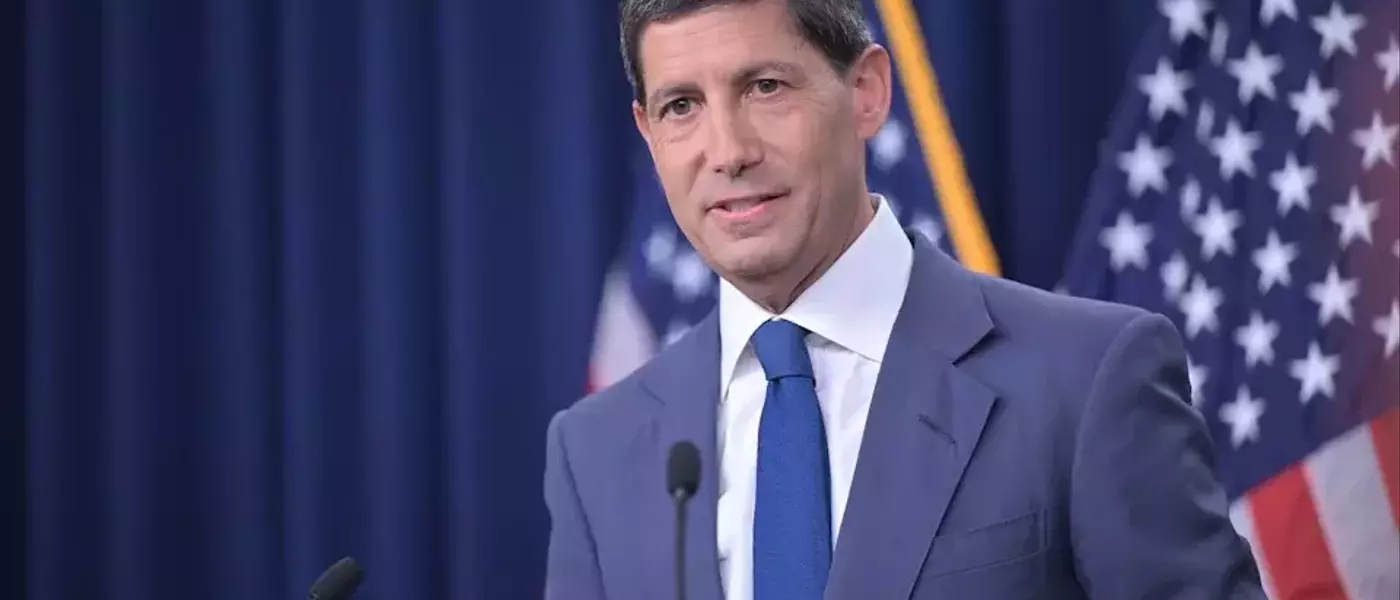
Since the beginning of 2026, global financial markets have experienced a period of remarkable dynamism, with key indices like the Dow Jones Industrial Average, S&P 500, and Nasdaq Composite achieving unprecedented highs. However, the most pivotal development has been the assumption of leadership at the Federal Reserve by Kevin Warsh. His tenure, commencing on May 22, 2026, marks a significant departure from previous policies, introducing a new era of monetary management. Warsh's reforms, particularly the cessation of explicit forward guidance and the pursuit of balance sheet deleveraging, are already sending ripples through the bond market and raising questions about their broader impact on market stability and investor sentiment.
Federal Reserve Undergoes Significant Transformation as Kevin Warsh Implements Bold Policy Shifts
In a groundbreaking move at the Federal Reserve, new Chair Kevin Warsh, who took office on May 22, 2026, has initiated sweeping reforms aimed at fundamentally altering the central bank's approach to monetary policy. One of his most immediate and notable changes, announced during his Senate Banking Committee confirmation hearing in April, involves the cessation of forward-looking guidance in the Federal Open Market Committee (FOMC) meeting statements. Historically, these statements provided critical insights into the Fed's future intentions regarding interest rate adjustments, acting as a compass for economists, financial institutions, and investors alike.
Starting with the June 2026 FOMC meeting, Warsh has opted for a "just-the-facts" communication style, eliminating any explicit forward guidance. While theoretically intended to prevent market speculation based on rumors, this new approach has, paradoxically, fueled considerable volatility in the bond market. Over the past several months, yields on long-term Treasury bonds, specifically 10-year and 30-year notes, have surged dramatically. The 30-year yield recently touched a 19-year peak, and the 10-year yield is nearing its highest point since the 2008 financial crisis. This heightened market sensitivity is attributed to the reduced transparency from the Fed, leading bond traders to react more aggressively to inflation signals, which have persistently remained above the FOMC's 2% long-term target.
Beyond communication strategy, Warsh is also championing a significant deleveraging of the Federal Reserve's balance sheet. Having expanded tenfold between August 2008 and April 2022 to nearly $9 trillion, and subsequently reduced to $6.5 trillion by December 2025 through quantitative tightening, the balance sheet had recently re-expanded to $6.75 trillion as of August 5, 2026. Warsh's vision entails the central bank adopting a more passive role in financial markets, which necessitates divesting trillions of dollars in assets. This substantial sell-off of long-term Treasuries would exert downward pressure on bond prices, consequently driving up yields and increasing borrowing costs across the economy. Such a policy, while not a formal interest rate hike, would effectively tighten financial conditions, potentially cooling inflation that has been above target for an astounding 65 consecutive months. However, this could also destabilize the current AI-driven stock market rally, heavily reliant on accessible debt financing, and expose an already elevated stock market to significant risks.
Finally, Warsh is challenging conventional notions of inflation management among FOMC policymakers. Citing former Fed Chairs Paul Volcker and Alan Greenspan, he articulated a vague definition of price stability: "a change in prices such that no one's talking about it." Simultaneously, he has declared the FOMC's 2% inflation target as an unyielding standard, stating, "There is no soft inflation target, there is no soft implicit target." This seemingly contradictory stance, coupled with his critique of core inflation measures in favor of the trimmed mean inflation rate (which excludes extreme price fluctuations), has left economists and market participants bewildered. The lack of clarity on preferred inflation metrics complicates predictions of future central bank actions, a situation that typically unsettles the stock market, which thrives on predictability.
The current landscape of financial markets is significantly shaped by the transformative policies introduced by Federal Reserve Chair Kevin Warsh. His bold decision to eliminate forward-looking guidance and advocate for a substantial reduction in the Fed's balance sheet marks a clear departure from his predecessors. While these measures aim to enhance the Fed's autonomy and potentially curb persistent inflation, they have inadvertently introduced considerable uncertainty and volatility. The bond market's intense reaction, characterized by soaring yields, underscores the profound impact of these policy shifts. Furthermore, the potential implications for the broader economy, particularly the AI-driven stock market, highlight the delicate balance between monetary control and market stability. As Warsh continues to redefine the central bank's role, investors and policymakers alike must carefully navigate these uncharted waters, recognizing that well-intentioned reforms can sometimes lead to unforeseen and significant consequences for financial markets and the economic outlook.