
"Hexed": A Chaotic Blend of Familiar Fantasy Tropes Lacking Coherent Narrative
 Hideo Kojima
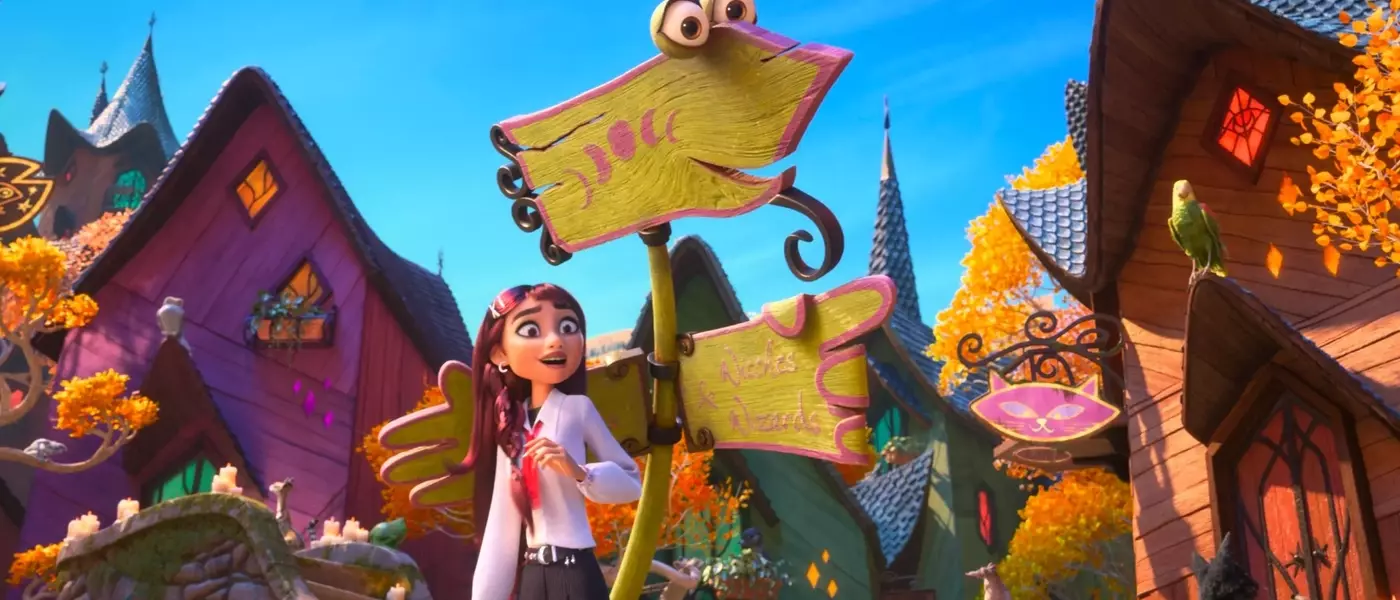
The film "Hexed" attempts to evoke a sense of nostalgic wonder by liberally peppering its narrative with allusions to beloved Disney classics and other fantasy franchises. This review highlights how the movie’s fantastical world, Hexe, and its inhabitants draw heavily from "Beauty and the Beast," "The Little Mermaid," and even "Fantasia," creating an environment seemingly built on familiar magical elements. However, instead of a heartfelt tribute, these frequent nods often come across as superficial filler, masking a convoluted story that introduces surprisingly grim undertones amidst a facade of joyous disorder. The narrative commences by establishing Hexe as a refuge for magic-users, protected by a prophecy concerning a "chosen witch" and a lunar ritual, into which protagonist Billie Doe, portrayed by Hailee Steinfeld, inadvertently stumbles, leading her into conflict with the formidable Queen Celeste, voiced by Jodie Foster.
Further dissecting the movie's thematic patchwork, the review observes that "Hexed" synthesizes elements from Disney princess narratives, the "Harry Potter" universe, and "The Incredibles," resulting in a somewhat disorganized blend of familiar tropes. While presenting charming creatures and elaborate costumes, reminiscent of Diagon Alley’s whimsical marketplace, the core storyline struggles with coherence. The film features Billie's mother, Alice, played by Rashida Jones, whose protective instincts confined her to a mundane suburban existence, mirroring themes of suppressed individuality found in "The Incredibles." Their joint quest to thwart a villain who seeks to regulate magical abilities underscores a journey of mutual understanding, yet the journey itself is often propelled by arbitrary plot devices, such as a child inexplicably knowing pirates have captured a crucial owl.
Despite its visually arresting aesthetic, characterized by a vivid neon color palette that enhances its darker, more unsettling sequences—like encounters with shapeshifting minions or a bizarre centipede of eyeballs—the film ultimately lacks a cohesive driving force for its protagonist. The critics find the storyline's progression frequently unmoored, with events unfolding without logical causality, preventing any genuine emotional depth from fully developing. Crucially, moments intended to explore the complex relationship between Billie and Alice, particularly Alice's "dark secret" and its impact on her parenting, are underdeveloped. Instead of confronting the emotional repercussions of past trauma, the narrative quickly shifts to a simplistic resolution, portraying Alice as merely a "cool mom" and suggesting Billie's perspective was always correct, thus bypassing an opportunity for profound character exploration.
"Hexed" serves as a contemporary example of how visually appealing presentations and numerous pop culture homages do not inherently create a compelling cinematic experience. While it successfully conjures a universe filled with enchantment and spectacle, the film's reliance on borrowed motifs and a fragmented plot prevents it from forging its own unique identity or delivering a resonant message. True artistic endeavor lies not just in showcasing familiar elements, but in crafting a distinctive vision that genuinely engages its audience with original thought and coherent storytelling, allowing for deeper emotional connections and a lasting impression that transcends mere surface-level charm. It reminds us that authentic creativity, rather than nostalgic imitation, builds truly enduring legacies in the realm of imaginative narratives.