
Nelson Peltz's Bid to Take Wendy's Private: An Analysis for Investors
 Vicki Robin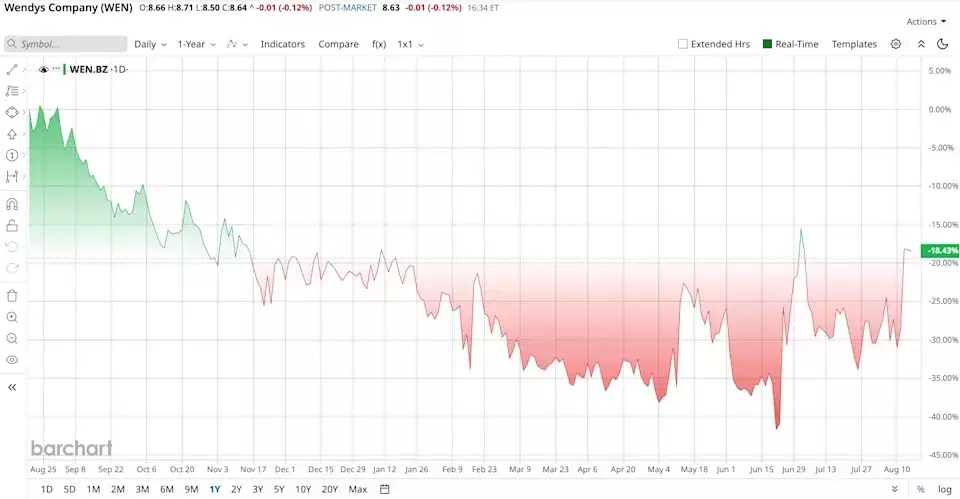
Activist investor Nelson Peltz, through his Trian Fund Management, is reportedly orchestrating a plan to acquire The Wendy's Company, aiming to transition the fast-food giant into a private entity. Collaborating with potential allies such as BlueFive Capital and franchisee Flynn Group, a formal proposal is anticipated within the coming weeks. This speculation has already invigorated WEN stock, which saw a 14.7% increase on August 12 following the initial reports. The move comes at a critical juncture for Wendy's, as it grapples with diminishing customer numbers, flagging U.S. sales, and escalating operational hurdles, even as its new leadership strives to implement a recovery strategy. Trian, holding a substantial 16% stake in Wendy's, has consistently voiced concerns about the company's undervaluation, leading to their exploration of strategic alternatives earlier this year.
Despite a modest improvement in 2026, Wendy's shares have experienced a challenging period, currently trading 20.3% below their 52-week peak from August 2025. The year-to-date performance shows a 3.72% gain, signaling a tentative rebound from a prolonged downturn, yet the stock remains 18.1% lower over the past 52 weeks. The recent surge on August 12, fueled by privatization rumors, has significantly altered market sentiment, as investors now factor in a potential takeover premium. This shift is particularly noteworthy for a stock previously burdened by reduced customer traffic, weaker sales, and broader brand challenges. The ongoing speculation surrounding a formal offer is poised to serve as a crucial short-term catalyst for WEN stock.
Wendy's second-quarter 2026 results, released on August 7, presented a mixed picture, highlighting the obstacles in its turnaround efforts. While total revenue rose 1.7% year-over-year to $570.6 million, adjusted revenue declined 1.4% to $443.2 million. The underlying operational trends painted a weaker scene, with global systemwide sales dropping 6.5% year-over-year to $3.4 billion, a steeper decline than the previous year. Profitability also suffered, with net income plummeting 40.8% to $32.6 million, and adjusted EBITDA falling 15.4% to $124.1 million. The adjusted EPS decreased by 37.9% to $0.18. Furthermore, the company concluded the second quarter with 7,180 restaurants, a reduction from 7,334 a year prior. In a significant development for investors, Wendy's retracted its full-year 2026 financial guidance. This decision, along with a halving of its quarterly dividend to $0.07 per share, aims to provide financial flexibility for the new leadership team, led by CEO Bob Wright, to implement a comprehensive turnaround plan focused on menu innovation, marketing, operational improvements, digital engagement, and franchise growth. Analysts largely maintain a cautious outlook for WEN, with a consensus 'Hold' rating, although some see potential for a 50.5% upside from the current trading price if a high-end target of $13 is met.
The potential privatization of Wendy's by Nelson Peltz represents a pivotal moment for the company, offering a fresh start away from public market pressures to implement its turnaround strategies. This development underscores the dynamic nature of corporate governance and the persistent pursuit of value creation. By potentially taking the company private, stakeholders are signaling a commitment to long-term restructuring and innovation, free from the quarter-to-quarter scrutiny that often hampers bold strategic shifts. This move, if successful, could revitalize the brand, enhance operational efficiency, and ultimately deliver sustained value, illustrating the power of strategic investment in reshaping corporate destinies.