
Reviving a Lost Supercar: The Nova Sterling Sebring Restoration Saga
 Brock Yates
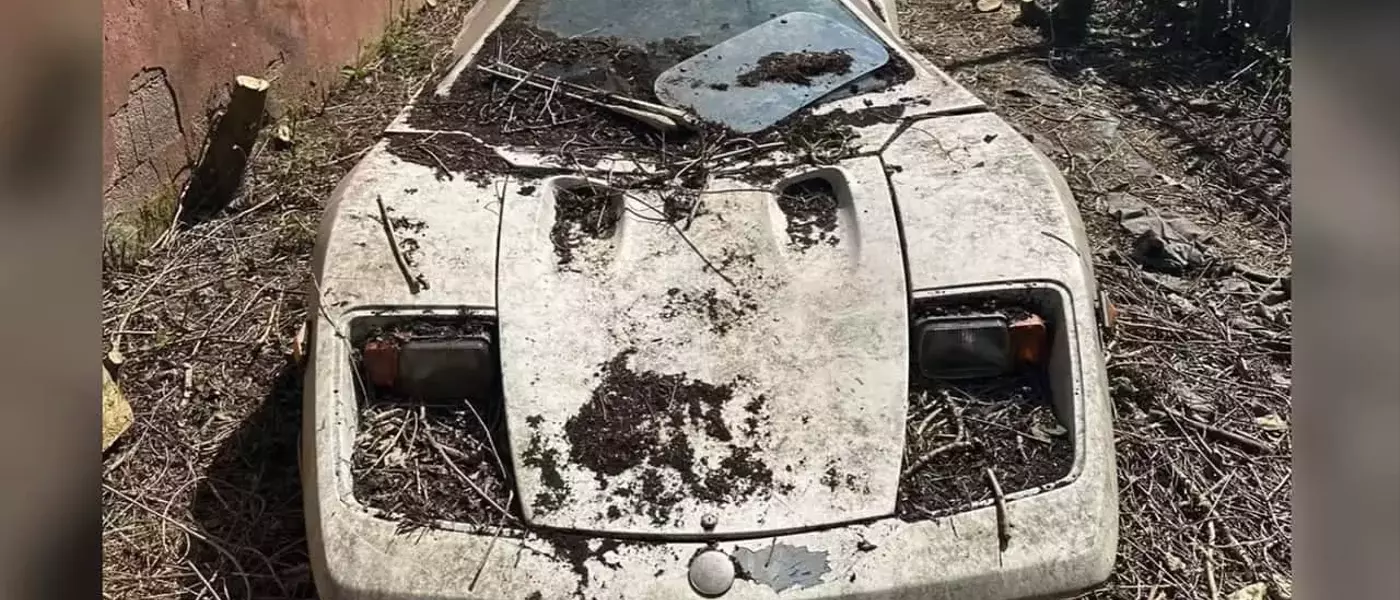
Unearthing Automotive History: Bringing a Neglected Supercar Back to Life
The Rediscovery and Initial Ambition
Hudson Auto Films embarked on an extraordinary project a year ago, acquiring a unique 1980s concept vehicle, the Nova Sterling Sebring, which had been abandoned for decades in overgrown foliage. The team's vision includes a complete overhaul, incorporating new metallic components, advanced parts, and a powerful turbocharged Alfa Romeo racing engine, aiming to transform it into a modern marvel.
Overcoming the Fiberglass Bodywork Challenge
Progress on the Nova encountered a significant slowdown as the team confronted the formidable task of restoring the fiberglass body shell. The latest video from Hudson Auto Films highlights the extensive effort involved, revealing over 100 hours of laborious grinding and repetitive tasks. This meticulous work, often unglamorous and not easily captured on camera, was crucial for addressing the car's cracked fiberglass, a severely misaligned canopy, and the degradation of its original body contours.
Origins of the Nova Sterling Sebring
The Nova's journey began in the early 1970s in the United Kingdom, initially conceived as a kit car based on the Volkswagen Beetle. Its distinctive fiberglass body featured a unique one-piece canopy that lifted forward, replacing conventional doors. This innovative design gained global appeal, with licensed versions distributed under various names. In the United States, it was known as the Sterling and later the Sterling Sebring, with adaptations made to suit American preferences and regulatory standards while retaining its signature canopy design.
Intricate Repairs of the Fiberglass Shell
Despite fiberglass's inherent resistance to rust, years of neglect had left the Nova's exterior riddled with cracks, pits, and poorly executed past repairs that obscured its once-sharp lines. The restoration team meticulously applied fiberglass bridging filler to the damaged areas, using a long sanding block to identify and correct any surface irregularities. A significant setback occurred during the repair of the front end when the filler failed to cure properly, likely due to a faulty batch of hardener. This necessitated the arduous process of removing the soft mixture and restarting, adding many hours to an already time-consuming phase of filling and sanding.
The Canopy Conundrum and Strategic Decisions
The canopy proved to be the most problematic component. Although a replacement from a donor Nova appeared to be in better condition, test-fitting revealed it was an inch too narrow on each side, leaving a substantial gap at the rear. This dimensional incompatibility led the team to reinstall the original, more damaged canopy, prioritizing its correct fit over the donor's slightly better superficial state.
Progress, Setbacks, and Future Outlook
The donor car's rear bumper, despite being bent and perforated, offered a more straightforward repair. Its thinner fiberglass allowed Hudson to successfully reshape it and secure it into place, achieving a far better alignment with the body than the canopy. With most of the panels now test-fitted, the crew proceeded to fill old holes from the fuel filler and coolant tank, subsequently refining worn edges to restore sharp lines. Hudson estimates that the body requires approximately 25 additional hours of work before it is ready for the final primer application.
Addressing the recent hiatus in project updates, Hudson admitted to experiencing burnout, citing delays in engine parts and a conscious decision to postpone electrical work until the sanding dust hazard was eliminated. He affirmed his commitment to advancing other aspects of the build, even if the bodywork continues to demand time, setting an ambitious goal of having the Nova drivable by the summer of 2027.