
Subaru's Quest for a 50% Thermal Efficiency Boxer Engine
 Brock Yates
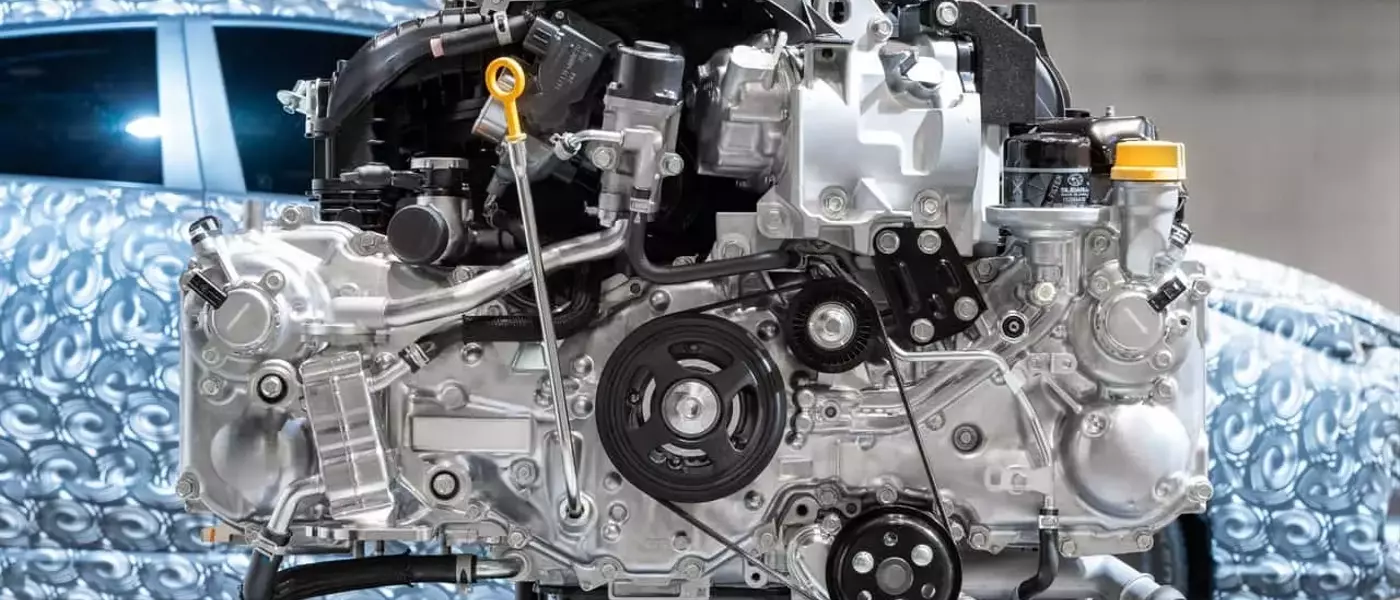
Subaru is making a significant leap in automotive engineering by investing in the next generation of its iconic boxer engine, aiming for an unprecedented 50% thermal efficiency. This move is part of a collaborative industry effort, where Subaru, alongside Toyota and Mazda, is committed to advancing internal combustion engine technology. While Toyota focuses on compact, high-efficiency four-cylinders and Mazda explores rotary engines and new Skyactiv-Z inline-fours, Subaru remains dedicated to refining its horizontally opposed boxer configuration. The goal is not merely to preserve tradition but to dramatically enhance the engine's efficiency without compromising the driving dynamics that define Subaru vehicles.
Subaru's engineering team is meticulously working on optimizing the combustion process within the boxer engine. Key areas of focus include improving airflow inside the cylinders to achieve a more homogeneous air-fuel mixture before ignition. The company has adopted advanced three-dimensional combustion analysis, allowing engineers to precisely predict flame propagation and prevent engine knocking, thereby fine-tuning combustion for maximum efficiency. These innovative approaches are already yielding promising results in early development stages, signaling a significant step forward in internal combustion engine design.
According to insights from a recent Subaru briefing detailed by Japanese magazine Motor-Fan, the developmental boxer engine, despite maintaining a relatively short stroke, demonstrates superior airflow characteristics compared to its benchmark competitors. This enhanced airflow contributes to a more efficient combustion cycle. Furthermore, Subaru's internal data indicates that the prototype engine offers approximately double the high-efficiency operating range when compared to the naturally aspirated engines currently found in its hybrid models. This expanded operational window is crucial for improving real-world fuel consumption across diverse driving conditions, ensuring that efficiency gains are not limited to specific scenarios.
The current prototype features direct injection and turbocharging, providing greater control over air intake and allowing for stronger torque delivery across a wider RPM range. To further push the boundaries of thermal efficiency towards the 50% target, Subaru is exploring several advanced technologies. These include variable-geometry turbochargers (VGT) to optimize turbine flow and improve responsiveness, potentially augmented by electric motor assistance to mitigate turbo lag. Additionally, the company is considering the Miller cycle, which manipulates intake valve timing to achieve a more favorable compression-to-expansion ratio, enhancing efficiency and reducing exhaust temperatures, which could simplify VGT implementation.
However, Subaru acknowledges that achieving the 50% thermal efficiency benchmark will likely require more than these technologies alone. Pre-chamber combustion, a technique recently adopted by BMW in its M engines for stricter emissions compliance, is also under consideration. While there's no immediate timeline for when this next-generation boxer engine will reach production or which models will be the first to receive it, the ongoing development highlights Subaru's commitment to its signature engine layout. This dedication to innovation in traditional powertrains contrasts with Subaru's strategy in Europe, where it plans to transition to an all-electric lineup by 2028, signaling a diversified approach to its global market strategy.
This steadfast commitment by Subaru to evolve its hallmark boxer engine underscores a deep-rooted brand identity, even as the automotive industry rapidly shifts towards electrification. By aiming for such a high thermal efficiency, Subaru is not just making its engines more economical and environmentally friendly but also reaffirming its engineering prowess and dedication to a unique powertrain that has defined its vehicles for decades. The efforts demonstrate a clear strategy to ensure the internal combustion engine remains a viable and competitive option in a world increasingly focused on sustainable mobility.