
Toyota Reveals Anticipated Pricing for the Scion Kei-01 Compact Utility Vehicle
 Dan Neil
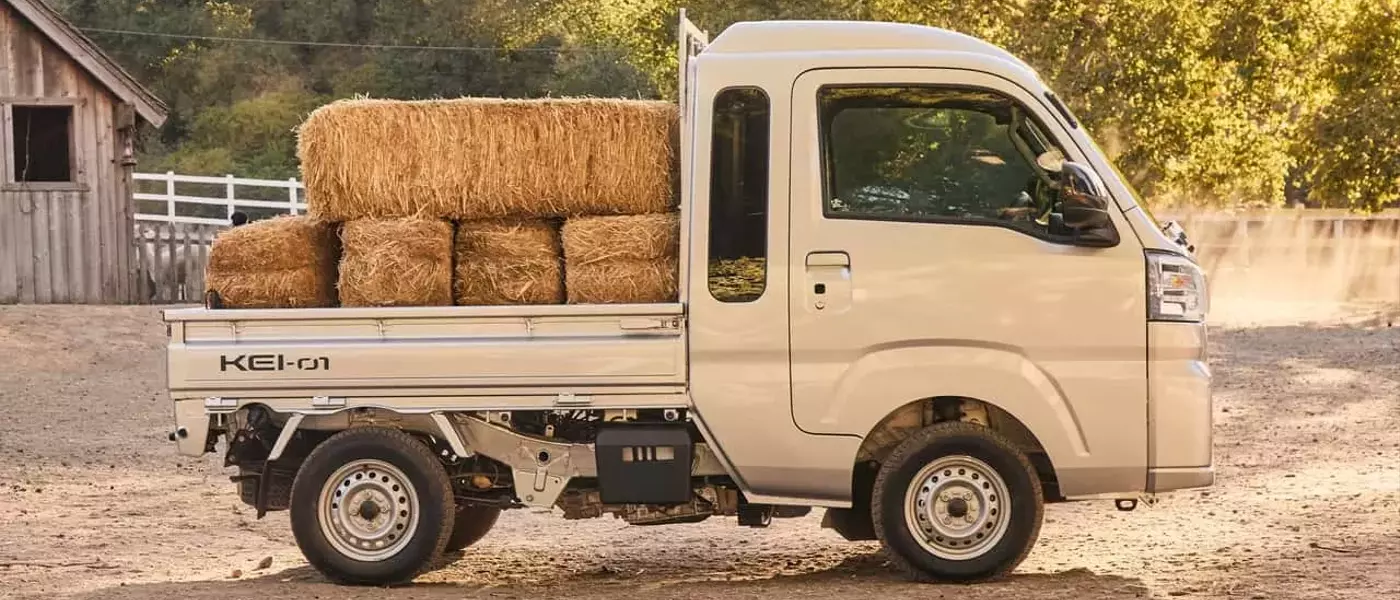
Toyota has provided initial insights into the potential cost of its new Scion Kei-01 truck, indicating a target around $22,000. This compact pickup, marking the return of the Scion nameplate to the American market, is specifically designed to operate as a low-speed vehicle, restricted to a maximum of 25 miles per hour. This speed limitation underscores its intended role as a utility vehicle for non-public road environments such as agricultural estates, sprawling ranches, or large institutional grounds like university campuses, rather than a direct competitor to conventional road-legal trucks. The company's engineering vice president, Don Federico, affirmed that this price point aligns with their expectations for a vehicle in this category. While significantly more affordable than full-size or even mid-size trucks, its unique operational profile distinguishes it from competitors like the Ford Maverick. The Kei-01 emphasizes practicality and specialized functionality over highway capability, offering a tailored solution for specific commercial and private applications.
The revival of the Scion marque introduces the Kei-01, a distinct entrant into the American automotive landscape. Toyota's strategic move aims to cater to a specialized niche, prioritizing utility and maneuverability in controlled environments. This compact workhorse is a deliberate departure from the mainstream truck market, offering a unique value proposition for buyers who require a robust, small-footprint vehicle without the need for high-speed highway travel. Its design philosophy centers on efficiency and operational suitability for defined tasks and locations, carving out its own segment where traditional larger pickups might be overkill or impractical.
Underpinning the Kei-01's utility is a powertrain featuring a 660-cc engine coupled with a continuously variable transmission, complemented by a four-wheel-drive system for enhanced traction. Despite its work-focused nature, the cabin integrates some modern conveniences, including a push-button start, power windows, and an infotainment display, albeit available exclusively in a right-hand-drive configuration. The truck's functional design is highlighted by its bed, which incorporates fold-down sides to facilitate easier loading and unloading of cargo, boasting a payload capacity of 660 pounds. These features combine to create a purpose-built machine optimized for demanding, localized tasks rather than extensive road journeys.
Production for the Scion Kei-01 is scheduled to commence in the latter half of 2027 at Toyota's manufacturing facility in Indiana. The initial rollout strategy focuses on fleet customers, targeting businesses and organizations that require multiple units for their operational needs across fixed private properties. Should the market respond positively and demand proves substantial, Toyota may then broaden its distribution to include limited retail sales for individual consumers. This phased approach allows the manufacturer to gauge market reception and scale production accordingly, ensuring the vehicle effectively meets the specific requirements of its intended user base before a wider release.
Ultimately, the Scion Kei-01 represents Toyota's innovative approach to addressing specific utility demands within the American market. By reintroducing the Scion brand with a highly specialized, low-speed compact truck, the automaker is carving out a new segment focused on efficiency and localized functionality. This vehicle is not intended to replace conventional trucks but rather to serve as a versatile tool for defined environments, offering a practical and cost-effective solution for tasks where larger, more powerful vehicles are unnecessary. Its anticipated price point and unique operational constraints reflect a clear strategy to provide a dedicated work vehicle for a distinct set of users, promising a blend of utility and accessibility.