
Zalando's AI-Powered Evolution: Becoming a Universal Shopping Gateway
 Naomi Campbell
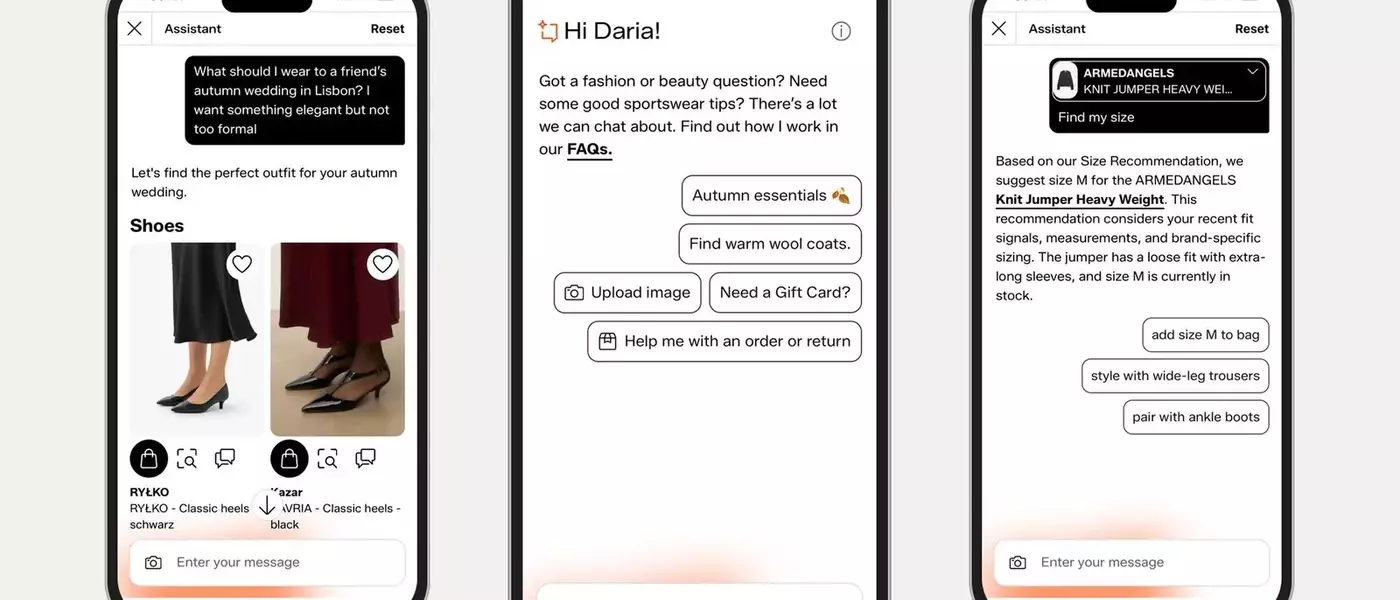
In a significant strategic pivot, European e-commerce leader Zalando is broadening its operational scope by introducing "Zalando Extended," an innovative initiative that enables its vast customer base to acquire products from external retailers without leaving the Zalando ecosystem. This bold move signals a transformation from a conventional multi-brand fashion retailer to a more expansive shopping gateway, leveraging artificial intelligence to facilitate transactions. The service, currently in its pilot phase with premium home and living brand Westwing, anticipates a full rollout by 2027, where AI agents will seamlessly manage purchases on behalf of users. This strategic evolution places Zalando at the forefront of the burgeoning AI commerce landscape, aiming to deepen customer engagement and control the digital retail relationship amidst growing competition from tech giants developing their own general-purpose AI assistants. By expanding its offering beyond its owned inventory, Zalando is redefining its role in online retail, focusing on discovery, personalization, and convenience across an ever-widening product spectrum.
The core of Zalando's new direction lies in its ambitious plan to integrate third-party retailers through a streamlined process, which essentially requires an affiliate-like product feed and a supplementary agreement. While the financial specifics of this partnership model, such as commissions or fees, remain undisclosed, the strategic implications are profound. Zalando, a platform renowned for curating a vast collection from luxury houses like Gucci and Burberry to contemporary labels such as Jacquemus, is shifting its emphasis from merely stocking merchandise to becoming the orchestrator of the entire customer purchasing journey. This reorientation acknowledges the accelerating race among tech powerhouses like OpenAI, Google, and Meta to develop universal personal AI agents, underscoring the critical importance of owning the direct consumer interaction in the digital age. By allowing customers to complete transactions for external goods within its app, Zalando aims to maintain primary control over the user experience and data insights.
Graeme Smith, Zalando's Chief Technology Officer, elaborated on this vision during an interview, highlighting the company's commitment to becoming the definitive starting point for fashion and lifestyle shopping. Smith emphasized that with over 63 million active customers and sophisticated Lifestyle AI capabilities, Zalando possesses a deep understanding of individual preferences, purchasing habits, and evolving needs. This data-driven insight allows for the creation of highly personalized and even proactive shopping experiences. The introduction of external retailers through AI agents is viewed as a lightweight yet powerful method to vastly expand the available assortment without the complexities of direct stocking. This approach not only enriches the customer offering but also enhances Zalando's personalization algorithms by learning more about user interests beyond its current catalog. The initial partnership with Westwing exemplifies this, promising a seamless in-app purchase experience for items like sofas and lamps by early next year.
Zalando is strategically positioning itself to compete effectively against broader AI agents by capitalizing on its specialized expertise and extensive data in fashion. Smith pointed out that while general-purpose AI agents are becoming more capable, Zalando's proprietary AI, developed over 15 years, offers unique advantages. This includes significant investments in size and fit technology, leveraging tens of thousands of weekly body measurements and vast return data to inform precise sizing recommendations. With over 10,000 size charts augmented by AI, Zalando provides a level of fit accuracy unmatched by generalist platforms. Furthermore, its ability to recommend complete outfits, informed by deep insights into trends, occasions, and years of customer behavior, offers a superior, tailored shopping experience. The company’s strategy also extends to engaging with third-party AI platforms, piloting advertising within ChatGPT and preparing to integrate with Google's AI Mode and Gemini app, ensuring Zalando products are discoverable wherever customers begin their online shopping journeys.
The rapid scalability of "Zalando Extended" is another key aspect of its potential impact. Smith noted that while the company is in a test-and-learn phase, the underlying integration mechanism is relatively straightforward. Most external retailers already produce affiliate feeds, which aligns perfectly with Zalando's requirements, making the onboarding process efficient for both parties. This simplicity suggests a significant potential for rapid expansion, allowing Zalando to integrate numerous retailers quickly. Regarding consumer trust, Zalando leverages its established reputation as a European company with 18 years of commitment to customer experience and stringent European data protection standards. This has fostered strong user adoption of Zalando Assistant, with millions of engagements leading to a significantly higher purchase likelihood compared to non-assistant sessions, all while ensuring robust consent mechanisms and data deletion options are in place.
Far from risking its direct customer relationship, Zalando views this expansion as a means to solidify its position as the premier destination for fashion and lifestyle discovery. By offering an even wider variety of products, including items like furniture previously unavailable, Zalando aims to provide more compelling reasons for consumers to initiate their shopping journeys on its platform. This multi-faceted approach, encompassing direct platform engagement, "inbound agentic commerce" through partnerships with leading AI platforms like Google and ChatGPT, and the "outbound agentic commerce" facilitated by Zalando Extended, underscores a comprehensive strategy to meet customers wherever they are in the digital shopping landscape. While acknowledging the emotional and considered nature of fashion purchases, Smith anticipates that AI agents will likely serve as powerful research tools, yet consumers might still prefer to finalize purchases directly on trusted retailer sites like Zalando, seeking detailed information and a broader selection of related items before committing.