
Daimler Truck's Significant Investment to Boost Indian Operations
 Chika Uwazie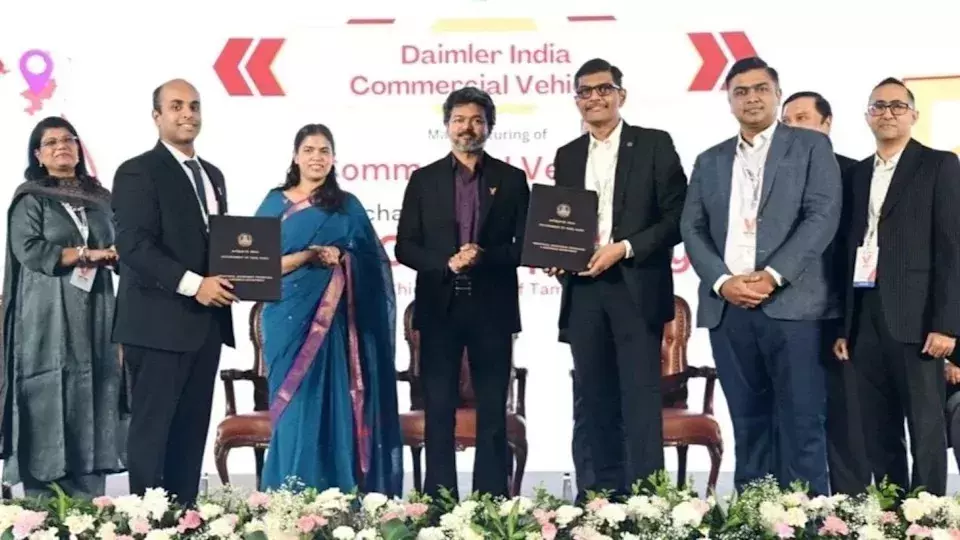
Daimler India Commercial Vehicles (DICV) has announced a monumental investment plan in India, signaling a new chapter for its operations in the country. This strategic move aims to fortify its position in the region while simultaneously enhancing its global manufacturing and supply chain footprint. The infusion of capital is expected to bring forth advanced product developments and significant job creation.
Daimler Truck's Ambitious Expansion in India
In a pivotal development for India's automotive sector, Daimler India Commercial Vehicles (DICV), the manufacturer behind the popular BharatBenz brand and a key subsidiary of Daimler Truck, formally entered into a non-binding facilitation Memorandum of Understanding (MoU) with the Tamil Nadu state government. This agreement, finalized on a Monday, August 17, 2026, outlines a proposed investment of an impressive Rs40 billion, equivalent to approximately $419.1 million. This latest financial commitment will elevate DICV's total investment within India to more than Rs145 billion.
The allocated funds are strategically channeled into various critical areas: bolstering BharatBenz's product development initiatives, expanding manufacturing capabilities, driving innovation through advanced research and development, and enhancing both infrastructure and technological readiness. This expansive project is anticipated to create approximately 400 new jobs within the envisioned timeframe, significantly contributing to local employment. DICV currently operates a sprawling 400-acre integrated manufacturing and R&D facility in Oragadam, a bustling industrial hub near Chennai, the state capital. This facility is a major employer, providing livelihoods for over 4,000 individuals and actively collaborating with more than 400 local suppliers, underscoring its deep integration into the regional economy.
A testament to its commitment to local sourcing, the company reports that around 92% of BharatBenz products' value is sourced directly from its extensive Indian supplier network. BharatBenz made its impactful entry into the Indian market in 2012, quickly establishing itself as a significant player. Furthermore, DICV has recently inaugurated a state-of-the-art Parts Logistics Centre in Pune, a move designed to enhance parts availability and significantly improve service support for its widespread dealer network.
Beyond its robust domestic operations, DICV plays an indispensable role in Daimler Truck's global supply chain. The company has successfully exported over 75,000 trucks and buses, alongside more than 330 million parts, to a vast network of over 70 international markets. Notably, it also ships transmissions from its Chennai operations directly to Daimler Truck facilities in Germany, highlighting India's strategic importance as a manufacturing and supply hub. Torsten Schmidt, Managing Director & CEO of DICV, emphasized the growing demand for reliable and efficient commercial vehicles in India, driven by expanding infrastructure, logistics, mining, construction, and passenger mobility sectors. He affirmed DICV's dedication to strengthening BharatBenz products, enhancing local manufacturing, ensuring service readiness, and optimizing parts availability for the Indian market, while simultaneously reinforcing India's pivotal position within Daimler Truck's worldwide operations.
In a recent initiative this past June, DICV further solidified its strategic partnerships by signing an MoU with the Ministry of Road Transport & Highways (MoRTH) under the Indian Government's ambitious scheme for replacing older trucks and buses in the Delhi-National Capital Region (NCR).
This substantial investment by Daimler Truck in India represents a powerful affirmation of the country's growing economic prowess and its strategic importance in the global automotive landscape. It underscores a forward-thinking approach that not only aims to meet the escalating local demand for advanced commercial vehicles but also positions India as a crucial export base. For local communities, this investment translates into significant job opportunities and skill development, fostering economic growth and technological advancement. From a broader perspective, it highlights the potential for international collaborations to drive innovation and create a more interconnected global manufacturing ecosystem. This move could inspire further foreign direct investment, bolstering India's 'Make in India' initiative and setting a precedent for sustainable industrial development.