
Danny Boyle's 'Ink' Explores Rupert Murdoch's Media Ascendancy
 John Lasseter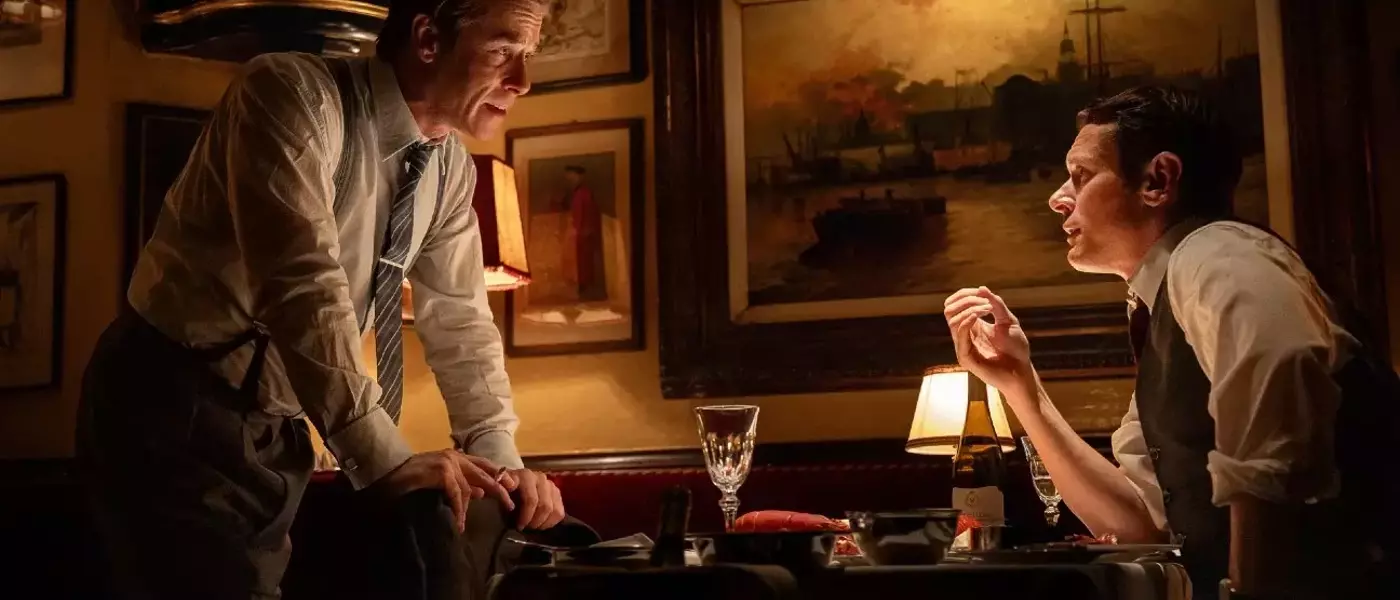
Danny Boyle's latest cinematic endeavor, 'Ink,' takes audiences on a journey to the formative years of Rupert Murdoch's media influence, specifically focusing on his acquisition and transformation of the British tabloid 'The Sun' in 1969. Based on James Graham’s stage play, the film premieres at the 83rd Biennale, offering a deep dive into the fusion of right-wing commentary and populist appeal that characterized Murdoch’s early journalistic ventures. It highlights how these foundational strategies eventually propelled the creation of his vast media conglomerate, including outlets like 'The New York Post' and Fox News.
The narrative of 'Ink' meticulously traces the pivotal moments following Murdoch's takeover of 'The Sun.' By recruiting Larry Lamb as editor, played by Jack O’Connell, the duo engineered a potent blend of political reporting and popular discourse, fundamentally reshaping the landscape of British media. Guy Pearce embodies the role of Rupert Murdoch, while Claire Foy portrays Jules Davies, a composite character symbolizing the influential women executives who contributed to Lamb's team at 'The Sun.' This adaptation introduces Davies as a new element, enriching the film's exploration of power dynamics within a burgeoning media empire.
During a recent press conference, director Danny Boyle articulated his deliberate choice to present Rupert Murdoch not as a caricature, but as a figure who, in the context of a rigid British society, initially represented a breath of fresh air. Boyle emphasized the importance of ensuring the audience felt implicated in the unfolding narrative, acknowledging the enjoyable and challenging aspects of Murdoch's early approach to journalism. Claire Foy echoed this sentiment, describing the immersion into 1960s tabloid journalism as “intoxicating” and expressing a sense of envy for the significant power wielded by Fleet Street reporters of that era.
Further insights into the film’s authenticity were provided by Guy Pearce, who revealed that Rupert Murdoch himself was content with Pearce's casting, a sentiment conveyed through Murdoch’s daughter, Elizabeth. While Murdoch had not yet viewed the film, he had previously seen the original stage play twice, though he remained characteristically tight-lipped about his opinions, a trait Graham attributed to Murdoch's strategic discretion. Boyle clarified that despite its 1960s setting, 'Ink' is not merely a historical piece but a commentary on contemporary media trends, arguing that the father of modern tabloid journalism, a "print man" at heart, would likely be dismayed by the decline of the print industry in the digital age.
The press conference concluded with Boyle underscoring the enduring value of journalism that dares to challenge authority, labeling it a cornerstone of any civilized society. He also addressed the emerging threats posed by artificial intelligence to the journalistic profession, questioning whether AI journalists, despite their efficiency, could ever truly uphold the principle of speaking truth to power. 'Ink' is currently competing at the Venice Film Festival and is scheduled for a limited U.S. theatrical release on December 11, followed by its Netflix debut in the U.S. and Latin America on January 8. Studiocanal is managing its international theatrical distribution, commencing with the U.K. on the same date, and is also responsible for global sales, collaborating with WME Independent for domestic representation.
The movie provides a compelling narrative on the intricate relationship between media, power, and societal evolution. It not only reconstructs a significant period in journalistic history but also provokes thought on the future of news dissemination in an increasingly digital and AI-driven world. The film underscores the profound impact an individual can have on shaping public discourse and the enduring relevance of robust, truth-seeking journalism amidst constant change.